Best Media Server Previs Software Ranked
- Disguise (d3)
- Watchout (Dataton)
- Pixera (AV Stumpfl)
- Green Hippo / Hippotizer (tvONE)
- Pandoras Box (Christie Digital)
- TouchDesigner (Derivative)
- Modulo Pi, 7thSense, VYV
A beautiful flythrough can still lose the room.
A seven-figure experience gets weeks of work, the client watches the render once, says "looks great, let us think about it," and goes quiet for two weeks. The render is rarely the problem. The client could not step inside it, send it to a CFO, or open it later and feel the thing they were about to approve.
That gap, between what the team sees in the engine and what the client can actually experience, is where budgets get cut and decisions stall.
Most previs power is trapped inside the box
Most of the previs muscle in this industry lives inside the media server.
Disguise has Previz. Pixera has a fast local 3D engine. Both are excellent. Both also assume the person being convinced owns the hardware, holds the license, or sits next to the workstation.
So the common workaround is to screen-record the previs, export a flat video, drop it in Frame.io, and hope a non-technical stakeholder feels something from a rectangle they watch once.
The pain shows up clearly in the field. In a recent evaluation, a director of experience technology at one of the largest AV integrators in the world described feeling "constrained by vendor lock-in." His team wanted something "agnostic" and "dynamic" with an "open-source feel" for the part of the job where they pitch and review with clients. They run Pixera and Disguise on the install side and have no plans to stop. The lock-in they want gone is on the selling side, where the client has to picture a system before committing to it.
That is the lens for this guide. The media server is the source of truth for the show. The open question is what goes in front of the client before the show exists.
The ranked rundown: previs by media server
Ranked by where most of the industry sits today, largest footprint first.
1. Disguise (d3)
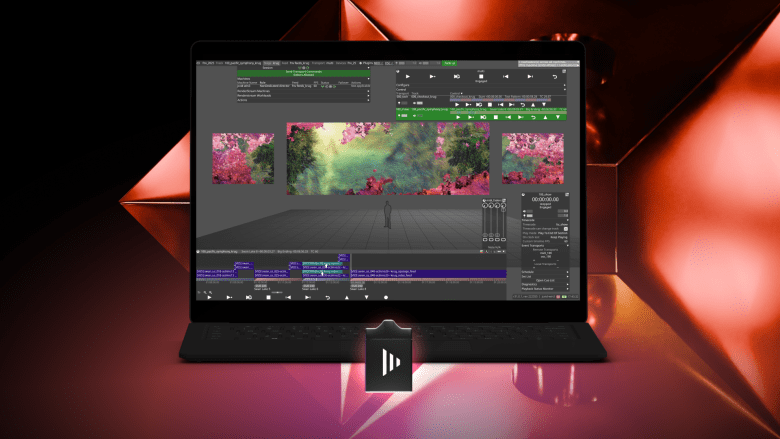
The premium leader. Disguise pioneered integrated pre-visualization and holds most of the virtual production and big-tour market. Its real moat is the cloud. With Disguise Cloud and Previz, a client can open a web link and orbit a 3D digital twin of the stage, and teams can simulate projector specs through the integrated Mapping Matter tooling.
For shops that live inside the Disguise ecosystem, that browser-based previs is genuinely strong, and almost nobody else offers it natively.
The constraint is the word "ecosystem." The cloud workflow assumes Disguise is the whole world. Integrators who run Disguise on some projects and other servers on the rest need a client-facing previs layer that does not care which server produced the show.
Best previs companion: Disguise Cloud for all-Disguise shops. An agnostic layer for the pitch and review stage across a mixed fleet.
2. Watchout (Dataton)

The legacy volume leader. Watchout is built into thousands of permanent museum exhibits, theme parks, and architectural installs. Its footprint is enormous because it has been the standard for fixed installations for decades.
It is not a client-facing 3D pitch tool. Watchout shops sell the vision with renders, decks, and exported video. The previs and the persuasion live in two separate stacks.
Best previs companion: a browser-based layer that turns the install design into something a museum board or brand stakeholder can walk through before fabrication starts.
3. Pixera (AV Stumpfl)
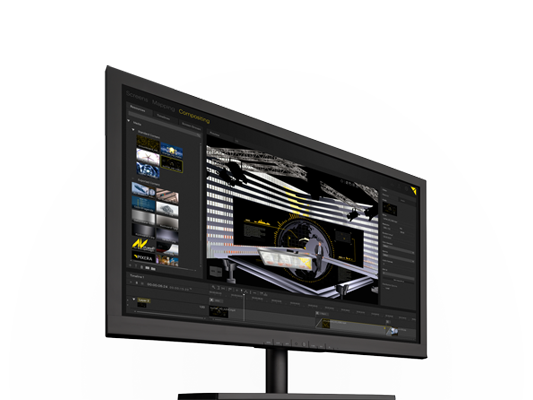
The fastest-growing challenger. Pixera bridges timeline workflows and modern real-time 3D, and rental houses are buying it over Disguise on cost of ownership. Its built-in 3D previs engine is fast and accurate.
The limit is the one every local engine hits. To show a client, the team brings them to the workstation, exports a flat video, or streams a screen on a call. There is no native browser-based 3D workspace a client can open alone and return to.
Best previs companion: Pixera's engine for internal programming, an agnostic browser layer for the moment the client needs to feel it without the workstation present.
4. Green Hippo / Hippotizer (tvONE)
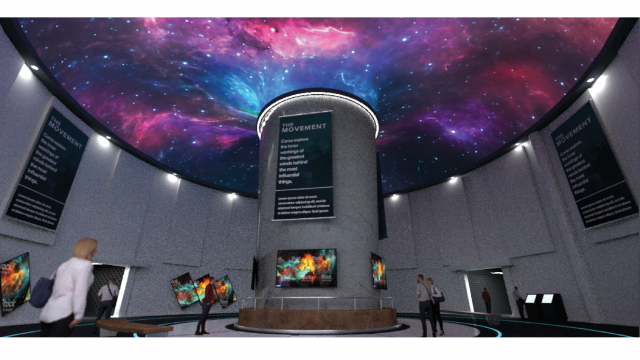
A theatrical and mid-tier touring mainstay, known for intuitive layer-based playback and real-time manipulation. Strong for live shows where operators need fast, tactile control.
Previs here is mostly about programming and operation, not pre-sell. The client-facing visualization is a separate job, usually handled in a 3D package and exported.
Best previs companion: an agnostic layer for the pitch and approval cycle, Hippotizer for showtime.
5. Pandoras Box (Christie Digital)
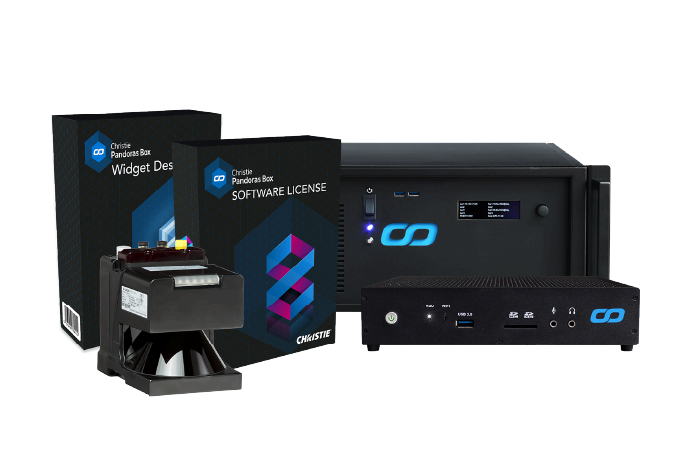
A niche powerhouse, deeply tied to Christie's high-end projection mapping installations. Inside the Christie projector ecosystem, the lock-in is the design.
It is a programming and playback environment, not a tool for selling a concept to a non-technical buyer.
Best previs companion: an open previs layer that shows the mapped concept to clients regardless of whose projectors land on the floor.
6. TouchDesigner (Derivative)

The category king for generative, interactive, sensor-driven work. Rather than sequencing pre-rendered clips, teams wire lidar to visuals and build experiences that respond in real time.
It can stream to a browser, but only when a developer builds the entire pipeline by hand. There is no out-of-the-box, cloud-hosted client review portal.
Best previs companion: an off-the-shelf client review layer, so creative technologists are not also building a bespoke web viewer for every pitch.
7. The boutique tier: Modulo Pi, 7thSense, VYV
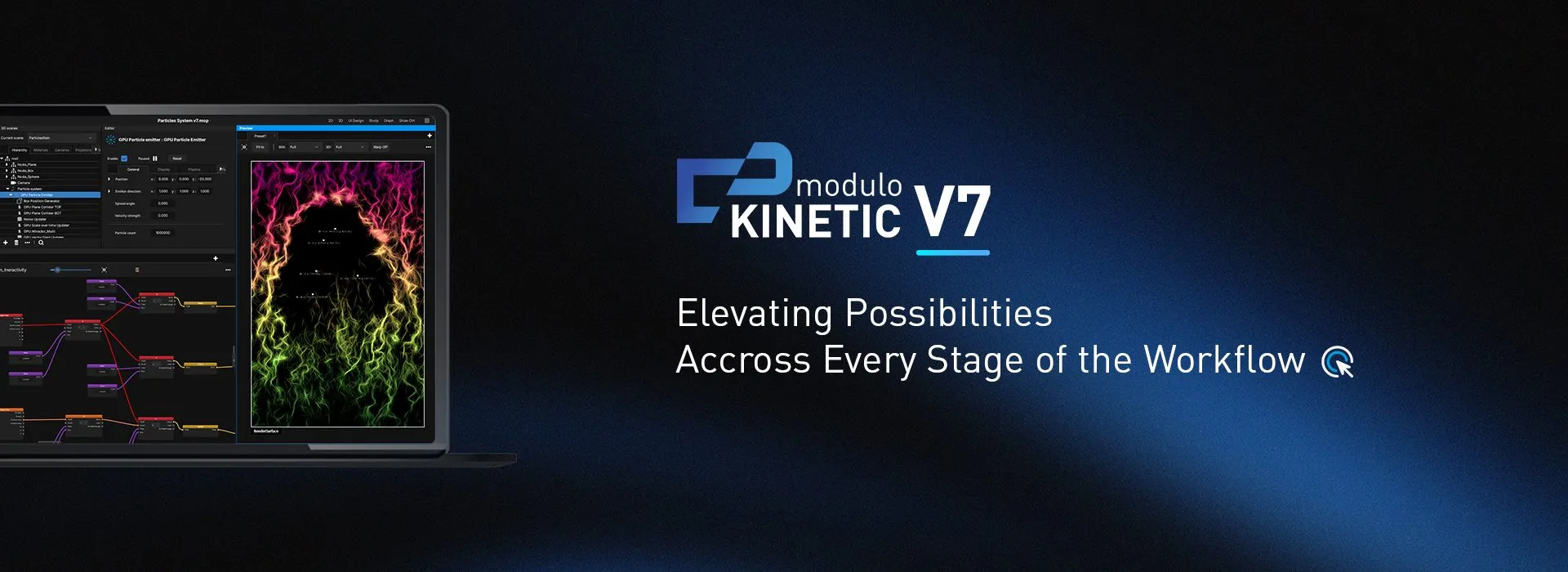
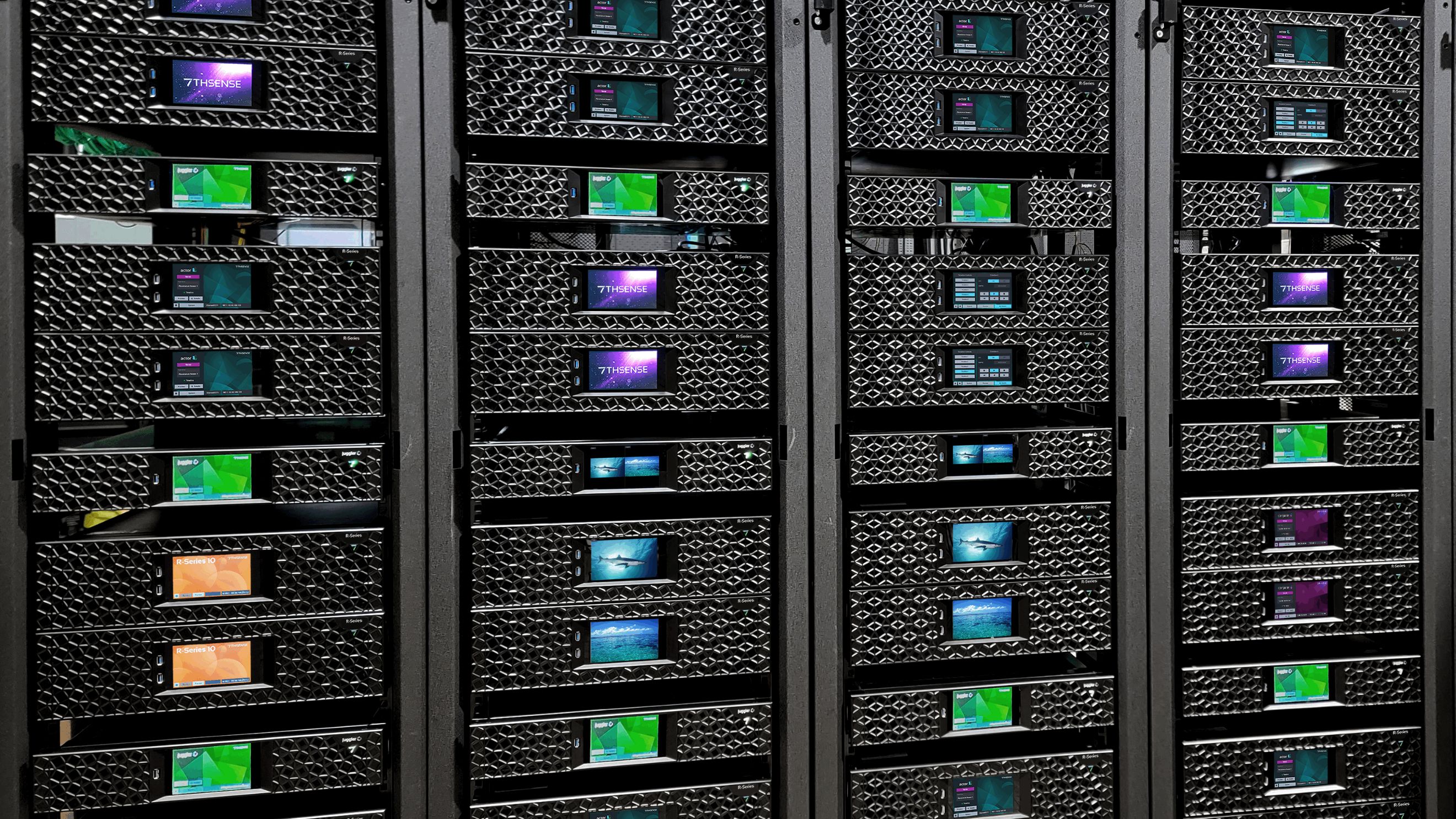
Ultra-high-end servers for theme parks, ceremonies, and uncompressed 8K spectacle. Specialized, profitable, and rare. Shops running these have serious technical teams.
Even so, the client who signs the check usually is not technical. The persuasion problem does not disappear at the high end. It gets more expensive to get wrong.
Best previs companion: the boutique server for the spectacle, an agnostic layer to bring non-technical buyers inside the concept early.
The pattern across all seven
Every server on this list is built to run a show. Almost none are built to win the room two weeks before the show exists.
The previs that does exist is locked to the box, the workstation, or a developer's custom pipeline. The client experience defaults to a flat video, and the thing that closes work goes missing: letting a buyer step inside the idea, send it up the chain, and return to it on their own time.
That layer is what Foveate is built for.
Where Foveate fits: the agnostic previs layer
Foveate 3D Previs sits in front of the real-time pipeline rather than inside it. A scene comes in from wherever it is built, Cinema 4D, Unreal, Unity, or a gray model, and Foveate becomes the browser-based way teams pitch it, review it, and read how the client engaged with it.
Three things separate it from the cloud previs that ships with one server.
It is server-agnostic. The client link behaves the same whether the install runs on Disguise, Pixera, Watchout, or a Christie rig. The buyer is never asked to own anyone's hardware.
It maps real content onto real screen geometry. Video and stills drop onto the actual LED and projection surfaces in the 3D scene rather than a flat mockup. New looks can be rendered from a saved camera position with AI, and generative video can stand in for a creative idea before a producer shoots a frame.
It is a client tool, not only an artist tool. Saved views, timecode, a clean scrubber, and a stripped-down viewer link serve the non-technical stakeholder who needs to see it and approve it. Comments and share-link analytics on the full version tell the team which moments the client actually spent time on.
The field signal is consistent. A head of sales and strategic partnerships at a 60-year-old global integrator described his team's competitive edge on shortlisted bids as one person photoshopping LED screens onto client-provided still images. The method works often enough that they keep using it. In a recent demo, after seeing video mapped onto actual screen geometry with the viewpoint switching instead of a fixed PDF angle, he called the approach "much better." His team kept returning to one recurring pain: how much of their work gets reworked at the last minute when a stakeholder arrives with a new idea. The time savings registered immediately.
Toy Robot Media, Foveate's first development partner, builds scenes in Cinema 4D and reviews them in Foveate with producers and end clients in the same browser link. On a brand activation turned around on a compressed timeline during an F1 race weekend, the bottleneck was never the creative. It was getting non-technical stakeholders to see and sign off on the work without flying anyone to a workstation. The full breakdown is in the Toy Robot Media case study.
Quick reference
| Media server | Best at | Client-facing 3D previs built in | Where Foveate fits |
|---|---|---|---|
| Disguise (d3) | Premium live, VP, big tours | Yes, via Disguise Cloud / Previz (ecosystem-bound) | Agnostic pitch + review across a mixed fleet |
| Watchout (Dataton) | Permanent installs, museums | No | Walkable client previews of install designs |
| Pixera (AV Stumpfl) | Real-time + timeline, fast-growing | Local engine only, no browser workspace | Browser-based client review and sign-off |
| Green Hippo (tvONE) | Theatrical, mid-tier touring | No (operation-focused) | Pre-sell and approval cycle |
| Pandoras Box (Christie) | Christie projection installs | No (playback-focused) | Open previs regardless of projector vendor |
| TouchDesigner (Derivative) | Generative, interactive, sensors | Only via custom dev | Off-the-shelf client review portal |
| Modulo Pi / 7thSense / VYV | Ultra-high-end spectacle | No | Bring non-technical buyers inside early |
Common questions
Does Foveate replace a media server? No. The server stays the source of truth for the show and for pixel-accurate technical work at runtime. Foveate is the layer in front of the client before that work exists.
Does it require changing the pipeline? No. Teams build where they already build. Foveate pulls the scene in and handles the pitch, the review, and the engagement data.
Is it locked to one ecosystem? No. The client link looks the same regardless of which hardware ends up on the floor. That is the reason it is built as a separate, agnostic layer.
The bottom line
The media server is the source of truth for the show. Foveate is the layer for the sale.
The room that decides the work is usually a browser tab, on a phone, two weeks before anyone powers on a real server. Most of the industry still tries to win that room with a flat video. An agnostic, open previs layer changes what the buyer can do with the idea before the build begins.
About the Author

Kitae Kim
Co-founder of Foveate, where he builds client-facing previs and presentation tools for production studios and AV integrators. Former architect who spent a decade watching winning creative lose to worse presentations.
Related Articles
AEC Win Rate: What's a Good Proposal Win Rate for Architecture Firms?
The AEC industry averages around a 39% proposal win rate. Teams using dedicated proposal software average closer to 45%. But the number itself matters less than understanding what's actually driving the gap.
Why Does Architecture Burnout Happen and How Do You Fix It?
Architecture burnout stems from three converging forces: low fees creating understaffing, martyrdom culture glorifying suffering, and inefficient processes consuming time. 1 in 5 architecture workers are planning to leave the industry.