
D5 Render vs Foveate
These are not competing purchases. D5 Render is where you produce the rendering. Foveate is where that rendering, and everything else in the proposal, gets delivered and tracked.
See the Comparison
What is D5 Render?
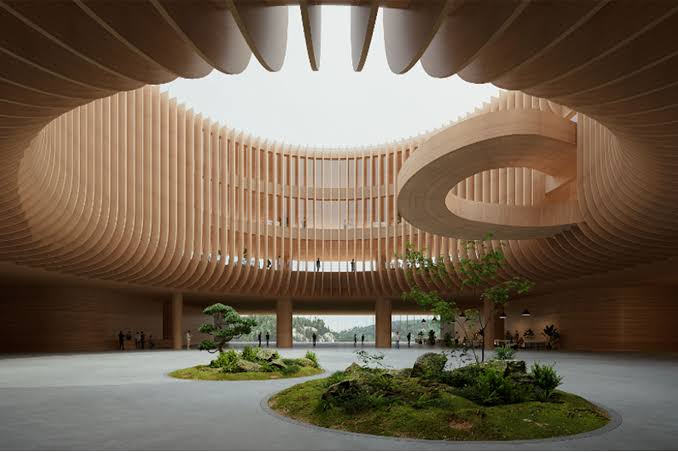
D5 Render is a real-time rendering application built around GPU ray tracing. It renders your model into stills, video, and panoramas with realistic lighting for your proposal and is not designed to be used as a proposal delivery tool.
What is Foveate?
Foveate is where the visuals you produce become a proposal that wins the work. Everything sits inside one live link, tailored to what a client responds to, and reports who opened it and what held their attention.
D5 Render vs Foveate
Where each tool sits in the work of winning a project.
Capability
D5 Render

What D5 Render is for
- ✓Photorealistic stills or animation, where quality is the deciding factor.
- ✓A render that stays in step with the model as the design develops.
- ✓Interior work, material studies, and lighting as the central deliverable.
- ✓Art-directed output, given the Windows hardware and the time in the schedule.
What Foveate is for
- ✓Putting that rendering in front of the client as part of a full proposal, with fee, schedule, and team alongside it.
- ✓Reaching decision-makers who will open it on a laptop or phone with nothing installed.
- ✓Knowing who read what before you follow up.
- ✓One link that stays current as several stakeholders look at it at different times.
Built to work together
D5 Render produces the rendering. Foveate is where that rendering lives once it needs to reach a client, exported as a still, an animation, or a panorama and placed straight into the proposal alongside your narrative, fee, and schedule. Firms that win consistently tend to run both, because D5 Render was never built to report on who actually opened what it made.
See how Foveate presentations work



Frequently Asked Questions
- Can I use D5 Render output inside a Foveate proposal?
- Yes, and this is the normal way the two are used together. Stills, video, and panoramas produced in D5 Render can be placed in a Foveate proposal alongside an interactive model, so the client gets both the rendered imagery D5 Render produced and the ability to explore the space themselves, inside a link you can track.
- Is Foveate a replacement for D5 Render?
- No, and it is not meant to be. D5 Render is a visualization tool with a live connection to your design model and a higher rendering ceiling. Foveate is where the finished rendering gets delivered to a client and tracked. They handle different stages of the same project.
- Does Foveate import D5 Render files directly?
- No. Foveate reads glTF and GLB. Export your geometry to GLB from your authoring tool such as Revit, Rhino, or SketchUp, and export imagery or video from D5 Render separately, since Foveate's job starts once the design is ready to present.
- Which is better for a client who is not technical?
- A browser link generally has the lowest barrier, because there is nothing to install or open. A rendered video is equally easy to watch but does not let the client look where they want, which is why the two are typically combined rather than chosen between.
- Do I need a powerful computer for either one?
- D5 Render is a desktop application that depends on a capable GPU. Foveate renders in the browser, so the demand sits on the viewer's device and is tuned for ordinary laptops and phones rather than workstations.
Better clients. Higher fees. No silence after the send.
Start free with 200 credits and build your first pursuit today. Or bring one you're running right now and we'll walk it through with you.